Showing posts with label functions. Show all posts

Saturday, May 21, 2022

Using pectin in cooking

Pectin, a plant-based polysaccharide, mostly in the skin and core of raw fruit, gelatinizes jelly and jam, thickens sauces and gives low-sugar options when making homemade fruit-based dishes. It functions as the structural "cement" that helps hold cell walls together. It's used to gel foods like fruit preserves - jams and jellies - and gummy candy.

High-pectin fruits, such as quince, apples, plums, blackberries, crabapples and red currants, have enough naturally occurring pectin to act as a preservative and thickener. Cores and seeds are high in pectin and are often included in the recipe for preparing fruit or juice spreads.

In solution, pectin has the ability to form a mesh that traps liquid, sets as it cools, and, in the case of jam, cradles suspended pieces of fruit. Pectin thickens soups and sauces without starch and acts as a stabilizer, acid can be added to milk-based sauces and soups without curdling them.

Acid helps extract pectin from fruit during gentle simmering and helps the gelling process, which will not take place unless the mixture is fairly acidic.

Sugar must be present in the right proportion with acid and pectin in order to form the gel. It is the preservative for the product, thereby preventing the growth of microorganisms. Sugar enhances the strength of the gel by attracting some of the water away from the pectin. In the absence of sufficient water, pectin molecules are more likely to unite with each other.

Pectin is also added to laxatives and throat lozenges to bolster their fiber. And it’s the glue used to hold the tobacco leaves in cigars.
Using pectin in cooking

Tuesday, June 19, 2018

High density lipoproteins (HDL)

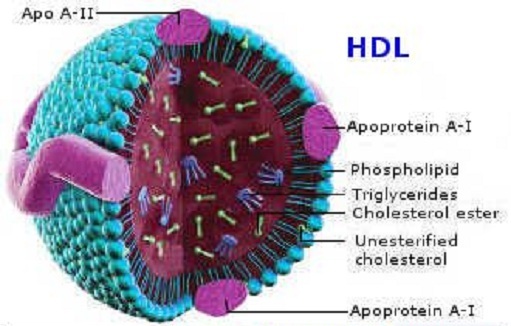
High density lipoproteins or HDLs are molecules that carry excess cholesterol from different body tissues back to the liver, where the cholesterol is converted into bile acids and then eliminated through the intestines.

HDL is the smallest and densest of the lipoproteins, containing the highest proportion of protein to cholesterol. In a normal healthy individual, HDL carries about 20-30% of total plasma cholesterol, whereas LDL (low density lipoprotein or bad cholesterol) carries about 70%.

HDL has various functions. It is atheroprotective, primarily through its role in transporting cholesterol from macrophages and other cells to the liver for excretion into the bile, a process termed reverse cholesterol transport. Reverse cholesterol transport is the method by which HDL removes excess cholesterol from tissues and arteries, and returns it back to the liver for recycling and excretion, interrupting the process of atherosclerosis (narrowing of the arteries) at key stages.

Thereby, the optimal cellular cholesterol concentrations essential for proper cell function and viability are maintained, and excess cholesterol which is toxic to macrophages is removed. It also has antioxidant, anti-inflammatory, and anti-thrombotic properties which contribute to its atheroprotective effect.

Approximately 9 mg cholesterol per kilogram body weight is synthesized by peripheral tissues every day and must be moved to the liver for effective catabolism. High levels of HDLs are linked with a decreased risk of cardiovascular disease. This is why it is often called “good cholesterol.”
High density lipoproteins (HDL)

Friday, March 30, 2018

What is cholesterol?

Cholesterol is oily in nature but is not the same as fat. It is an essential molecule to our well being as it helps for making cell membranes, steroid hormones, nerve sheaths, manufacture bile acids, and much more. The liver makes most of the cholesterol and the rest comes from the diet.

Cholesterol is a member of a class of naturally occurring compounds called sterols. It is an essential part of the fatty sheath that insulates nerves and the outer membrane of all animal cells, and is a component of chemicals that include steroids and sex hormones such as androgens and estrogens.

Cholesterol can react with oxygen to become oxidized in the body. Oxidized cholesterol can injure endothelial cells and trigger or contribute to the process of atherosclerosis, Cholesterol in tallow use in some fast-food cooking, powered eggs, and french fries is oxidized. Oxidized cholesterol is also found in package mixes, powdered custards, and powdered whole milk.

Antioxidants are believed to protect cholesterol from becoming oxidized. Antioxidants act as electron donors and deactivate free radicals, preventing free radicals from injuring.
What is cholesterol?

The Most Popular Posts all the time